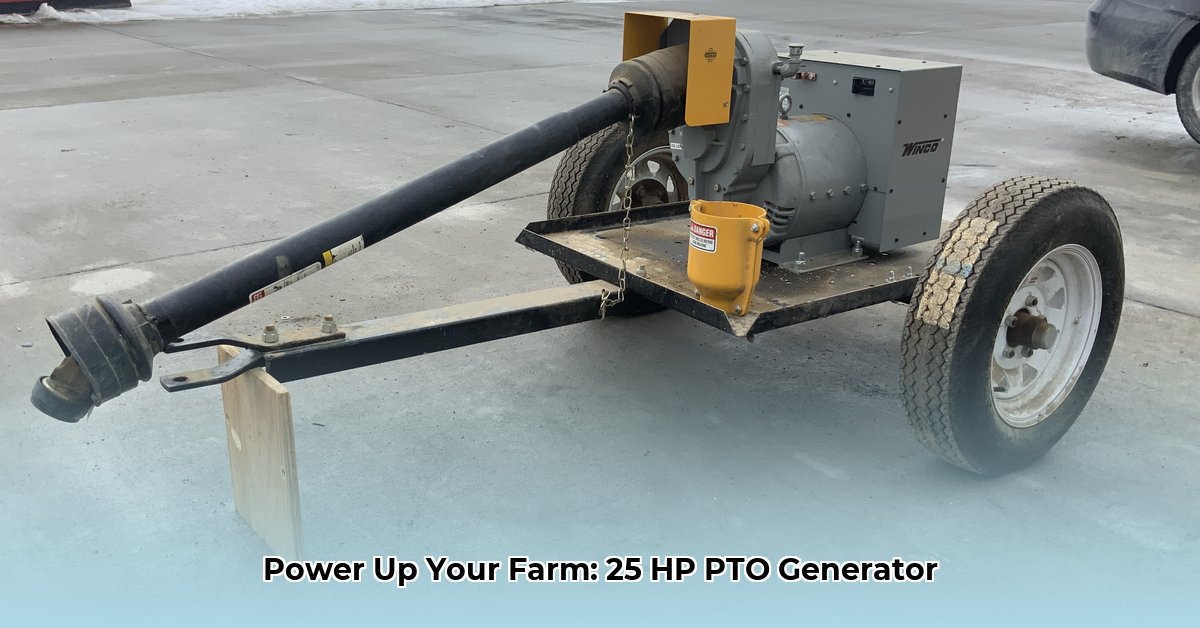
Running a farm efficiently and sustainably requires reliable power. A PTO (Power Take-Off) generator, driven by your 25 HP tractor, offers a cost-effective and environmentally conscious solution. This guide provides a step-by-step approach to selecting, installing, operating, and maintaining a PTO generator for optimal farm productivity. For more information on PTO shafts, check out this resource.
Choosing the Right PTO Generator
Selecting the appropriate PTO generator involves several key considerations. Failing to properly size your generator can lead to equipment damage or insufficient power.
Matching Generator Capacity to Tractor Horsepower
A crucial first step is matching the generator's output to your tractor's capabilities. A general rule of thumb is to allow approximately 2 horsepower (HP) for every kilowatt (kW) of generator output. Your 25 HP tractor could therefore comfortably power a generator producing around 12.5 kW. However, always consult your tractor's manual for specific PTO power output specifications and never exceed those limits. Overloading the system can cause serious damage.
Determining Power Needs
Before purchasing, list all equipment you intend to power. This includes tools like pumps, augers, lighting systems, and refrigeration units. Calculate the combined wattage of each device to determine your total power requirements. Consider peak demand – the highest wattage used simultaneously – to ensure sufficient power capacity. Underestimating power needs could result in inadequate performance.
Understanding Voltage Requirements
Farm equipment typically operates on either 120V single-phase or 240V three-phase power. Some specialized tools may require higher voltages. Carefully check the voltage requirements of all your equipment and ensure the generator's output matches. Using incorrect voltage poses a significant safety hazard and can destroy equipment.
Comparing Generator Types
PTO generators come in various configurations:
- Brushless: Offer longer lifespans, require less maintenance, and are more efficient. These typically command a higher initial cost.
- Brushed: More affordable upfront, but require more frequent maintenance and have shorter lifespans.
- Inverter: Produce cleaner power, ideal for sensitive electronics, and are generally fuel-efficient. However, they often have lower peak power output capabilities and a higher price tag.
- Conventional/Open Frame: Simple in design, readily available, and typically less expensive. However, they are usually louder, less fuel-efficient, and require more maintenance.
The best choice depends on your budget, maintenance capabilities, and power needs.
Installation: A Step-by-Step Guide
Improper installation can lead to safety hazards and equipment malfunction. Follow these steps meticulously:
- Read Manuals: Thoroughly review both your tractor and generator manuals before beginning installation. These manuals contain crucial safety information and operating procedures.
- Secure Mounting: Mount the generator on a level, stable surface capable of supporting its weight. Vibrations can loosen connections, potentially causing damage or injury.
- PTO Shaft Connection: Carefully connect the PTO shaft from the tractor to the generator, aligning splines correctly and using appropriate guards. Consult your manuals for precise instructions. Improper connection can lead to shaft breakage and serious injury.
- Wiring and Grounding: Use appropriately sized wiring and ensure proper grounding to prevent electrical hazards. Adhere to all local electrical codes and regulations. Incorrect wiring can cause electrical shocks or fires.
- Fuel Lines: Connect fuel lines securely, using leak-proof fittings and clamps. Ensure proper ventilation to prevent the buildup of dangerous fumes. Fuel leaks pose a fire risk.
Operation and Maintenance: Ensuring Longevity
Regular maintenance is crucial for extending the lifespan of your generator and ensuring reliable operation.
Starting and Monitoring
Always follow the manufacturer’s instructions for starting the generator. Monitor the generator's operation, listening for unusual sounds or vibrations. Address any issues promptly to prevent further damage. Ignoring problems can lead to serious equipment malfunction.
Regular Maintenance Schedule
Establish a preventative maintenance schedule, including regular oil changes, belt inspections, and cleaning. Regular maintenance significantly extends the lifespan of your generator and reduces unexpected repairs. Establishing a routine enhances reliability.
Troubleshooting Common Problems
Familiarize yourself with common issues like poor starting, unusual noises, and voltage fluctuations. Consult your manual for troubleshooting steps or seek professional assistance if needed. Addressing problems promptly prevents cascading issues.
Safety Considerations: Prioritizing Safety
Safety is paramount when working with machinery and electricity.
- Never work alone: Always have a second person present in case of emergencies.
- Disconnect power: Before performing any maintenance, disconnect the PTO shaft and shut down the generator completely.
- Electrical safety: Adhere strictly to all electrical safety codes and regulations.
- Fuel handling: Handle fuel carefully, avoiding spillage and ensuring adequate ventilation.
- Emergency plan: Develop an emergency plan that addresses potential scenarios, including equipment failure and fuel leaks.
Long-Term Considerations: Cost-Benefit Analysis
Evaluating the long-term costs and benefits is crucial for making an informed decision.
- Fuel efficiency: Consider the fuel efficiency of different generator models to minimize operating costs.
- Maintenance costs: Factor in regular maintenance costs, such as oil changes, filter replacements, and parts. Preventative maintenance reduces long-term costs.
- Lifespan: Invest in a high-quality generator with a longer expected lifespan to reduce the need for frequent replacements.
- Environmental impact: Choose a generator with lower emissions to reduce your farm's environmental footprint.
- Potential for hybrid systems: Consider incorporating renewable energy sources, such as solar panels, to supplement your PTO generator and increase sustainability.
Conclusion: Powering a Sustainable Future
A well-chosen and properly maintained PTO generator offers a reliable, cost-effective, and environmentally friendly power solution for your 25 HP tractor. By carefully considering the factors outlined in this guide, you can ensure years of efficient and sustainable operation.